Discover every powerful example of referral marketing you need. This guide breaks down 8 real-world campaigns and shows you how to replicate them today.
February 9, 2026 (25d ago)
8 Powerful Example of Referral Marketing Campaigns to Scale Growth in 2026
Discover every powerful example of referral marketing you need. This guide breaks down 8 real-world campaigns and shows you how to replicate them today.
← Back to blog
8 Powerful Referral Marketing Examples for 2026
Summary: Explore 8 proven referral marketing examples and step-by-step playbooks to scale growth, optimize rewards, and automate payouts in 2026.
Introduction
Referral marketing is more than offering a discount; it’s the combination of timing, psychology, and low-friction technology that turns happy customers into predictable growth engines. Many programs fail because incentives are wrong, mechanics are confusing, or sharing is too difficult. This guide analyzes eight high-impact referral campaigns, explains the exact mechanics behind them, and gives clear playbooks so you can replicate what works for your product today. Referral-driven customers also tend to be more engaged and loyal, making this channel especially efficient for long-term growth1.
1. In‑App Referral Links: Native Pop‑Ups and Embedded Sharing Buttons
The most effective referral marketing happens where users already are: inside your product. In-app referral links let authenticated users generate and share unique invites with a click, removing friction and capturing users at peak engagement.
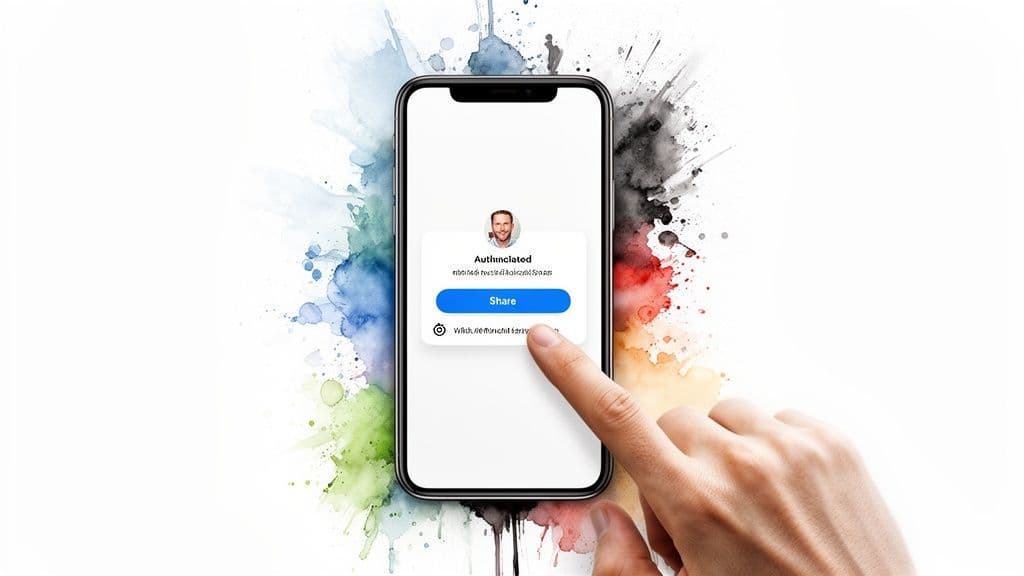
Campaign mechanics and examples
- Trigger: A success moment, such as completing onboarding, finishing a first project, or exporting a report.
- Messaging: Simple, benefit-driven copy like “Enjoying the app? Share with a friend and get $10 credit.”
- Reward: Instant value — credits, extended trials, or unlocked features for both parties.
Companies like Slack, Figma, and Calendly built sharing into core flows to make team expansion feel native. This method converts because it meets users at the moment they appreciate value and makes sharing effortless.
Actionable playbook
- Identify your users’ “Aha” moments where perceived value spikes.
- Embed unobtrusive UI elements (buttons, banners, dashboard widgets).
- Trigger contextual pop-ups after success moments and offer multiple share channels.
- Automate link generation and tracking with a referral platform to measure the entire lifecycle.
2. Email and Social Share Templates: Prompted Outreach with Prefilled Messaging
Not every share needs to start inside the app. Sending prefilled emails or social messages after a key event reduces cognitive load and encourages sharing among less technical users.
Campaign mechanics and examples
- Trigger: Post-purchase confirmations, completed milestones, or after receiving support that delighted the customer.
- Messaging: Prefilled templates that the user can edit, e.g., “I’ve been using X for my team — try it with this link and get 30% off.”
- Reward: Account credit, discounts, or limited-time perks for both referrer and referee.
This approach works well alongside in-app prompts: some users prefer sending an email or posting on social rather than using an embedded share dialog.
Actionable playbook
- Create short, editable email and social templates optimized for click-through.
- Provide one-click copy-and-paste and native channel buttons (Gmail, Outlook, Twitter, LinkedIn).
- Time the prompt to moments of delight and include clear reward details.
- Track which channels drive the most conversions and iterate on messaging.
3. Tiered and Custom Reward Structures: Incentivizing Different Behaviors
Not all referrals are equal. Tiered rewards offer escalating benefits based on volume or value, turning occasional advocates into high-performing partners.
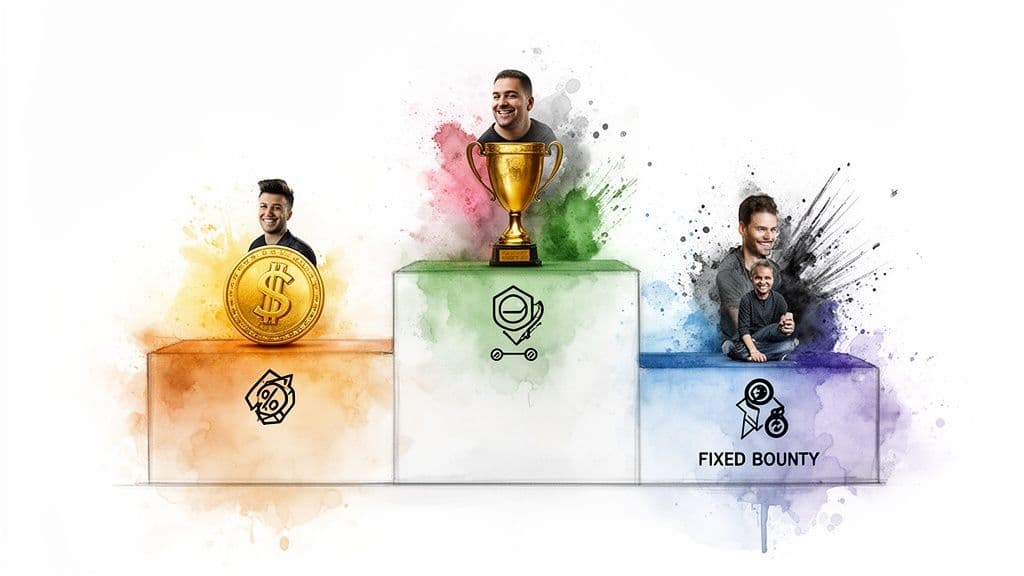
Campaign mechanics and examples
- Trigger: Reaching referral count milestones or revenue thresholds.
- Messaging: Aspirational copy like “Refer 5 customers to unlock 30% commission.”
- Reward: Escalating commissions, cash bonuses, extended cookie windows, or co‑marketing support.
Dropbox pioneered simple reward escalation with storage bonuses. Enterprise programs use percentage commissions tied to first-year revenue to reward partners for higher-quality referrals.
Actionable playbook
- Analyze LTV and CAC to set sustainable tier thresholds.
- Make progression visible via a partner dashboard.
- Offer hybrid rewards (fixed bounty + percentage commission).
- Automate tier tracking and payouts to remove manual errors.
4. Marketplace and Subscription Platform Referrals: Automated Payouts and Compliance
Marketplaces and multi-vendor platforms need reliable payouts, tax compliance, and clear revenue sharing. Automated payout systems integrated with Stripe or similar payments platforms scale partner programs while maintaining audit trails.
Campaign mechanics and examples
- Trigger: A completed transaction, a new subscription, or a successful booking.
- Messaging: Transparent payout schedules and clear terms.
- Reward: Revenue share or cash payouts processed automatically.
Shopify and Airbnb used automated credit and payout flows to scale their ecosystems; automation reduced admin overhead and built partner trust.
Actionable playbook
- Set clear payout rules and thresholds to minimize transaction fees.
- Collect tax forms (W‑9/W‑8BEN) during onboarding to avoid delays.
- Provide a partner portal with earnings, conversion data, and payout history.
- Use integrated payout platforms to handle commissions, mass payouts, and reporting.
5. Affiliate Partner Networks: Multi‑Channel Promotion and Commission Tracking
Affiliate networks formalize relationships with creators, agencies, and resellers to reach new audiences. They provide partners with tracking links, marketing assets, and a clear commission structure.
Campaign mechanics and examples
- Trigger: A partner publishes content, runs a campaign, or recommends your product.
- Messaging: Expert endorsements and case-driven content.
- Reward: Typically recurring percentages of the revenue from referred customers.
HubSpot and ConvertKit scale through affiliate partners by offering competitive commissions and partner resources.
Actionable playbook
- Recruit partners whose audiences match your ideal customer profile.
- Provide a partner kit with emails, creatives, and copy.
- Structure tiers to reward higher performance.
- Use an affiliate platform to automate tracking, payouts, and compliance.
6. Community and Creator Referral Programs: Incentivizing Micro‑Influencers
Creators and community leaders bring authentic endorsements to niche audiences. These micro-influencers often drive higher engagement than large, generic campaigns.
Campaign mechanics and examples
- Trigger: A creator publishes a review, tutorial, or template and includes a referral link.
- Messaging: Authentic stories like “Here’s the tool I use; try it with my link.”
- Reward: Recurring revenue share, exclusive perks, or paid sponsorships.
Notion and ConvertKit empower creators with template marketplaces and recurring commission structures that reward sustained recommendations.
Actionable playbook
- Identify creators already using your product.
- Offer a creator kit with ready-made assets and KPI tracking.
- Provide transparent dashboards for earnings and conversions.
- Build community with Slack channels, regular calls, and content features.
7. B2B Account‑Based Marketing (ABM) Referrals: Enterprise Partner Activation
Enterprise referrals are high-touch and strategic. ABM referrals often involve co‑selling, deal registration, and dedicated partner managers to win and expand major accounts.
Campaign mechanics and examples
- Trigger: A partner identifies a strategic client fit.
- Messaging: Highly personalized outreach and co‑branded proposals.
- Reward: Percentage of ACV, recurring revenue share, or co‑marketing funds.
Salesforce and HubSpot use deal registration and partner managers to prevent channel conflict and align incentives.
Actionable playbook
- Target a small set of strategic partners whose services complement yours.
- Implement deal registration to protect partner leads.
- Offer value‑based commissions that match enterprise deal size.
- Assign partner managers to create joint plans and enable co‑selling.
8. Product‑Led Referral Loops: Freemium Tiers and Expansion Revenue
Product‑led loops tie referral rewards to in‑product value. Instead of external discounts, users earn additional capacity, premium features, or extended limits for successful referrals.

Campaign mechanics and examples
- Trigger: Approaching a freemium limit like storage, projects, or seats.
- Messaging: Utility-focused copy like “Need more space? Invite a friend and get 500MB.”
- Reward: Additional storage, extra seats, or premium feature access.
Dropbox’s storage-for-referrals is the canonical example; the reward solved a real user pain point and directly increased product value for both users.
Actionable playbook
- Identify friction points for free users (storage, seats, projects).
- Design rewards that directly solve those limitations.
- Visualize progress with UI indicators to gamify referrals.
- Automate fulfillment so rewards apply instantly after a successful referral.
8‑Point Referral Marketing Comparison
| Program | Implementation complexity | Resource needs & speed | Expected outcomes | Ideal use cases | Key advantage |
|---|---|---|---|---|---|
| Viral loops / leaderboards | Low–Medium | Design + platform; fast | High engagement | Consumer launches, contests | Gamification boosts participation |
| In‑app referral links | Medium–High | Product dev & UX; once built, instant | Very high conversion | SaaS with authenticated users | Zero‑friction sharing at success moments |
| Tiered rewards | Medium | Finance + tracking; testing required | Higher-value referrals | Programs focused on LTV | Incentivizes performance |
| Marketplaces & subscriptions | High | Payment & legal integrations; slower | Scalable multi‑party payouts | Marketplaces, multi‑vendor systems | Automates payouts and compliance |
| Affiliate networks | Medium | Partner ops & commission budget | Scalable acquisition | Agencies, creators, bloggers | Leverages third‑party trust |
| Community & creators | Low–Medium | Community management; quick start | Niche, high engagement | Micro‑influencers, niche creators | Authentic endorsements |
| ABM referrals | Very High | Partner managers, CRM, legal | High ACV deals | Enterprise accounts | Co‑selling and strategic value |
| Product‑led loops | Medium | Product changes + analytics | Drives expansion revenue | Freemium/PLG products | Aligns reward with product value |
Turn Examples Into Your Growth Strategy
Successful referral programs are integrated growth engines, not add‑ons. They rely on three consistent pillars: reduce friction, align incentives with value, and automate tracking. Start by choosing the model that matches your GTM strategy, define the “Aha!” moments for referral prompts, architect a sustainable reward structure, and continuously iterate based on analytics.
- Choose the right referral model for your funnel.
- Pinpoint the moments users feel most value.
- Start simple with a clear reward, then iterate to tiers or automation.
- Launch, measure, and optimize continuously.
The compounding nature of referrals makes this channel uniquely efficient: every new customer has the potential to become an advocate and fuel further growth. For tools that automate link generation, payout automation, and partner dashboards, consider platforms that integrate with your payments stack and analytics.
Frequently Asked Questions
Q: Which referral model works best for SaaS startups? A: For SaaS startups, in‑app referral links and product‑led referral loops usually perform best because they capture users at moments of product value and directly increase product adoption.
Q: How should I choose referral rewards? A: Align rewards with what users value most—credits for transactional apps, additional capacity for freemium products, or percentage commissions for partners. Balance attractiveness with sustainability by modeling LTV and CAC.
Q: How can I avoid fraud and disputes in referral programs? A: Use automated tracking and verification, require account authentication before issuing rewards, set minimum payout thresholds, and retain audit logs for disputed conversions.
1.
Nielsen, “Global Trust in Advertising” (2015). [https://www.nielsen.com/us/en/insights/article/2015/global-trust-in-advertising-2015/]
2.
ReferralCandy, “Referral Program Statistics and Benchmarks.” [https://www.referralcandy.com/blog/referral-program-statistics/]
3.
Dropbox case studies and growth notes (examples of product‑led referral design). [https://www.dropbox.com/business]
💸 Get 10x More People SharingWith Zero-Friction Signup
Traditional sharing programs lose most potential promoters at signup. ShareMySaaS eliminates that barrier completely — users start sharing with one click, no forms required. Turn every satisfied customer into an active promoter and watch your reach explode.