Getting started with affiliate marketing: Learn goals, tracking, rewards, and scalable strategies to grow your program fast.
February 8, 2026 (26d ago)
Getting started with affiliate marketing: A practical SaaS growth guide
Getting started with affiliate marketing: Learn goals, tracking, rewards, and scalable strategies to grow your program fast.
← Back to blog
SaaS Affiliate Marketing: Practical Starter Guide
Getting started with affiliate marketing: Learn goals, tracking, payouts, and scalable strategies to grow your program fast.
Introduction
Starting an affiliate program is more than opening a new marketing channel — it’s building a performance-based growth engine that turns your happiest customers into your most effective advocates. For SaaS companies, affiliates often deliver higher lifetime value and better retention than many paid channels, while tying marketing spend directly to revenue.
Why Affiliate Marketing Is a Go-To Growth Channel for SaaS
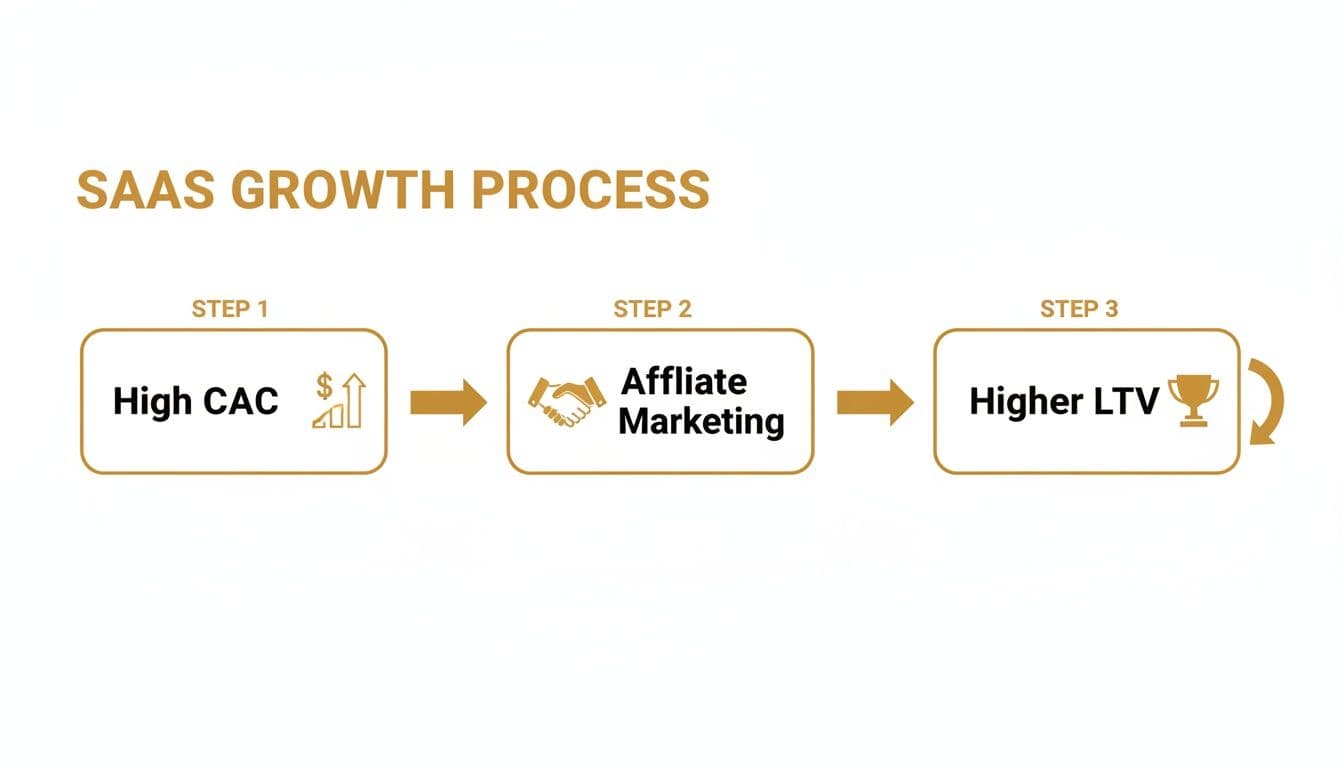
If you run a SaaS business, you’re probably feeling the squeeze of rising customer acquisition costs (CAC) and crowded paid channels. Affiliate marketing isn’t a magic bullet, but it shifts growth toward relationship-driven acquisition: you pay for real customers, not clicks. That alignment reduces risk and makes marketing spend far more predictable.
The Unmatched Power of a Trusted Recommendation
When someone you trust recommends software, that endorsement carries weight. Affiliate referrals typically convert better, bring higher lifetime value, and churn less because the customer already understands the product’s value.
- Higher conversion rates from warm referrals
- Increased lifetime value (LTV) because customers arrive with clearer expectations
- Lower churn due to better initial fit
See how a modern SaaS like Klap’s affiliate program structures partnerships for reference.
A Modern, Integrated Approach to Partnerships
Forget clunky third-party networks. A modern SaaS affiliate program is built into your product: activate users in-app at the moment they’re most excited and give them a unique link in one click. This reduces friction and creates an immediate growth loop.
The affiliate channel is growing rapidly and delivers strong returns for brands and platforms.12
Defining the Goals and KPIs for Your Affiliate Program
Launching without clear objectives is a fast track to wasted time. Focus on measurable outcomes that tie to your subscription economics. Don’t just track clicks—track paid customers, retention, and blended CAC.
From Vanity Metrics to Business Impact
Build your strategy around three core goals:
- Reduce CAC: Affiliates are performance-based—you pay for conversions, not impressions. Track affiliate-sourced CAC and blended CAC to see true impact.
- Increase LTV: Referred customers often have higher LTV because they come with pre-built trust.
- Boost MRR: Turn affiliates into a predictable revenue stream by focusing on long-term value rather than one-off sign-ups.
The best affiliate programs are strategic assets designed to improve your LTV-to-CAC ratio.
Setting Realistic 90-Day Targets
Turn high-level goals into specific 90-day targets. Below are example KPIs and targets you can adapt.
| Primary Goal | Primary KPI | Secondary KPIs | Example Target (First 90 Days) |
|---|---|---|---|
| Reduce CAC | Affiliate-Sourced CAC | CPL, Blended CAC, Conversion Rate | Acquire 50 new paid customers via affiliates at a CAC under $400. |
| Increase LTV | Average LTV of Affiliate Customers | Churn Rate (affiliate cohort), Upgrade Rate | Maintain average LTV ≥ $1,500 for affiliate cohort. |
| Boost MRR | New MRR from Affiliate Channel | Trial-to-Paid Conversion Rate, Affiliate Revenue | Add $5,000 in new MRR attributable to affiliates. |
Example 90-Day Goal: Reduce blended CAC by 15% by acquiring at least 50 paying customers through affiliates while maintaining average affiliate LTV of $1,500.
Affiliate marketing drives significant e-commerce value and offers strong ROI for many brands and SaaS businesses.34
Designing a Reward Structure That Actually Motivates
Your commission structure fuels the program. Choose an approach that motivates the partners you want without destroying margin.
Common SaaS Reward Models
- Recurring percentage commission: Pay a percentage (often 20–30%) of subscription revenue for a set period. This aligns affiliate incentives with LTV and retention.
- One-time fixed fee: Pay a flat amount per new paying customer. Simple to manage and budget for.
- Performance-based tiers: Increase commission as affiliates hit milestones to reward top performers.
Choose the model that fits your price, product, and growth goals. Research competitor commission rates to stay competitive.https://mayurnetworks.com/blog/affiliate-marketing-commission-rates
| Reward Model | Best For | Pros | Cons |
|---|---|---|---|
| Recurring Percentage | High-LTV subscription products | Aligns affiliate and business goals; attracts quality partners | More complex to track; payouts vary with churn |
| One-Time Fixed Fee | Predictable customer value, volume play | Simple budgeting and payout | Doesn’t reward long-term retention |
| Tiered Structure | Mature programs | Strongly motivates top partners | More admin complexity |
A $2,500 ACV B2B product typically does well with a recurring percentage model; a $10/month consumer app may prefer a one-time fee.
Creating a Frictionless Onboarding Experience
A clunky sign-up flow kills momentum. Make joining effortless with in-app activation and one-click link generation when users are most engaged.

Leverage Instant In-App Activation
Pop a clean modal at peak moments of satisfaction: generate the affiliate link with one click and open a simple dashboard. No extra accounts, no forms.
Equip New Affiliates From Day One
An automated welcome sequence is essential. Give new affiliates a starter kit with their link, brand guidelines, creative assets, and product talking points.
Onboarding sequence checklist:
- Email 1 (Instant): Welcome Kit — link, dashboard, commission terms.
- Email 2 (Day 2): Promotional Toolkit — logos, banners, templates.
- Email 3 (Day 4): How to Talk About Us — 3–5 value props and sample posts.
Nailing Your Tracking and Payouts: The Technical Backbone
Trust depends on accurate tracking and reliable payouts. Manual spreadsheets don’t scale and invite errors.
Deciding Who Gets the Credit: Attribution Models
Common models:
- First-click attribution: The first affiliate gets credit.
- Last-click attribution: The affiliate with the final click before purchase gets credit.
For most launches, last-click attribution is easiest to explain and implement. You can revisit attribution as your program matures.https://sharemysaas.com/blog/best-affiliate-tracking-software
Why You Need Automated Payouts
Automate payouts through a processor like Stripe to avoid admin overhead and ensure timely, accurate payments. Automation builds trust and frees your team to focus on growth.
Protecting Your Budget from Fraud
Use affiliate platforms with built-in fraud detection to flag suspicious patterns—spikes in clicks with no conversions, bad referral sources, or bot-like sign-ups. Automated monitoring preserves budget and data integrity.
Scaling: Focus on High-Value Partners
Once you’ve launched, analyze your data to find affiliates who drive the highest LTV and lowest churn—not just the most clicks. Invest in your top performers with commission sprints, exclusive assets, and a VIP tier.
A small group of elite partners can drive disproportionate results. In one example, a company doubled affiliate revenue by creating a VIP tier for 15 top partners, increasing commissions, and offering dedicated support.
Common Questions About SaaS Affiliate Programs
What’s the right commission to pay my affiliates?
Most SaaS companies start with a recurring commission in the 20–40% range for the first year. Balance attractiveness with sustainability by modeling payouts against your LTV and CAC.
How do I find my first affiliates?
Start with your happiest customers. Use in-app prompts to convert satisfied users into affiliates. Then expand to bloggers, influencers, and complementary partners.
How can I prevent affiliate fraud?
Use an affiliate platform with real-time conversion tracking, IP monitoring, and automated anomaly detection. These systems catch sophisticated fraud faster than manual reviews.
Q&A — Concise Answers to Common Concerns
Q: How quickly can I expect results from an affiliate program?
A: You can see initial sign-ups within weeks, but meaningful MRR and LTV impact typically appears in 60–90 days as affiliates gain momentum and referrals convert.
Q: Should I pay recurring commissions or one-time fees?
A: Pay recurring commissions when retention matters and LTV is high. Use one-time fees for predictable, low-cost customer value and volume-driven growth.
Q: What metrics should I prioritize?
A: Prioritize affiliate-sourced CAC, trial-to-paid conversion, churn for the affiliate cohort, and affiliate-driven MRR.
Ready to turn your best customers into your most powerful marketers? ShareMySaaS makes it happen with a zero-friction, in-app affiliate platform. Get started in minutes at https://sharemysaas.com.
1.
Statista, “Affiliate marketing market size worldwide 2017–2025,” https://www.statista.com/statistics/377036/global-affiliate-marketing-market-size/
2.
Awin, “Partner Marketing Insights,” https://www.awin.com/us/insights
3.
Rakuten Advertising, “Affiliate marketing resources and statistics,” https://rakutenadvertising.com/resources/affiliate-marketing/
4.
Impact, “Affiliate Marketing Statistics and Trends,” https://impact.com/blog/affiliate-marketing-statistics/
💸 Get 10x More People SharingWith Zero-Friction Signup
Traditional sharing programs lose most potential promoters at signup. ShareMySaaS eliminates that barrier completely — users start sharing with one click, no forms required. Turn every satisfied customer into an active promoter and watch your reach explode.