Learn how to make an affiliate link that scales your SaaS. This guide covers link creation, tracking, and automating payouts to drive real growth.
January 29, 2026 (3d ago)
How to Make an Affiliate Link for SaaS Growth
Learn how to make an affiliate link that scales your SaaS. This guide covers link creation, tracking, and automating payouts to drive real growth.
← Back to blog
How to Make an Affiliate Link for SaaS Growth
Learn how to make an affiliate link that scales your SaaS. This guide covers link creation, tracking, and automating payouts to drive real growth.
Introduction
Creating a scalable affiliate program doesn’t have to be complex. This guide walks you through generating unique, trackable affiliate links, measuring conversions, and automating payouts with Stripe so you can turn satisfied customers into reliable growth channels.
Why in-app, low-friction affiliate programs win
Creating an affiliate link is more straightforward than most people think. For many modern SaaS platforms, it’s as simple as generating a unique URL through an in-app pop-up. The affiliate marketing world gained mainstream attention when Amazon launched its Associates program in 19961, and the channel has evolved dramatically since then.
The global affiliate market has expanded rapidly, with major research estimating significant growth over the coming years2.
Turn your users into your best promoters
The old approach—long sign-up forms, manual approvals, clunky portals—creates friction and discourages participation. A modern program should be woven into your product so authenticated users can become advocates with a single click. Your happiest customers already have the trust and context to promote your product effectively. Removing barriers empowers them to share the moment they discover value.
This approach delivers a high ROI: you’re leveraging authentic recommendations rather than buying attention through ads. For background on affiliate fundamentals, see this primer on what affiliate marketing is.
The power of in-app integration
Platforms that generate unique, trackable links inside the app capture users at peak enthusiasm. In-app link generation works well because it:
- Captures peak enthusiasm—users share when they’re most engaged.
- Eliminates friction—no external portals or extra forms.
- Leverages existing trust—a recommendation from a colleague or friend carries weight.
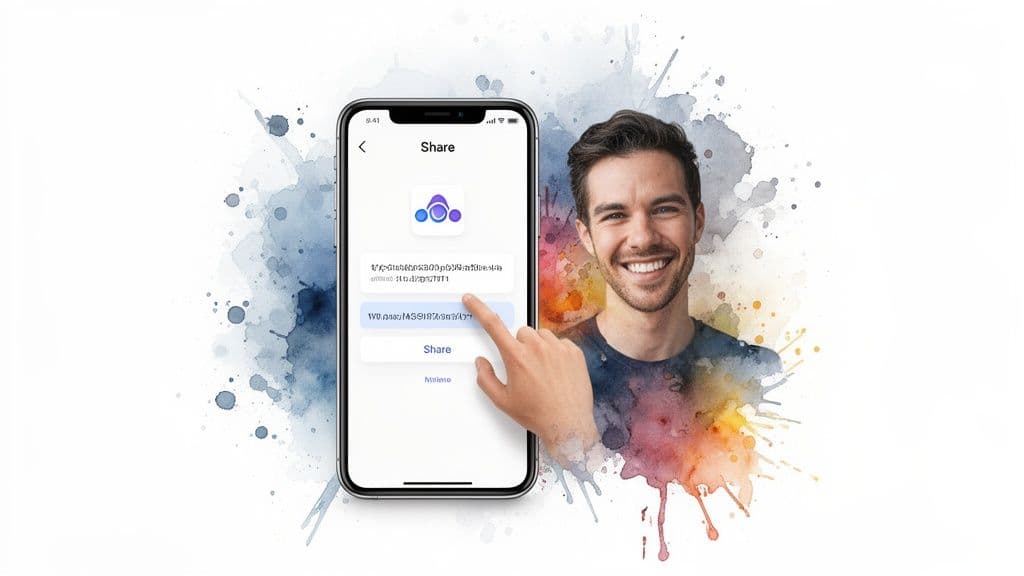
Embed a simple “Share” pop-up so users can grab their unique link and post it immediately. That single moment can convert delight into a sustained growth channel.
Cracking the code of a great affiliate link
An affiliate link is more than a URL; it’s a tracking mechanism that tells you who sent a customer and where they came from. Every affiliate link starts with a base URL—the page you want partners to send traffic to—then layers on parameters that enable attribution.

Think of parameters as little data packets appended to the URL (starting with a question mark). They transform a plain link into a tool that records who sent the click and the context around it.
Must-have pieces
Every link needs a unique affiliate ID—an alphanumeric code that ties signups back to a promoter. A basic structure looks like:
https://your-saas.com/?aff_id=123xyz
Avoid using personal information as IDs; randomized codes protect privacy and keep links secure.
To understand not just who sent traffic but how and why, layer on UTM-style parameters. Example:
https://your-saas.com/?aff_id=123xyz&utm_source=blog&utm_campaign=winter_promo
This tells you who referred the traffic (aff_id), where it came from (utm_source), and which campaign it was part of (utm_campaign). For SaaS, this granularity helps you identify which partners and campaigns actually drive revenue.
Essential affiliate link parameters
Use these building blocks for reliable attribution:
- Affiliate ID —
?aff_id=123xyz— uniquely identifies the promoter. - UTM Source —
&utm_source=newsletter— identifies the traffic source. - UTM Campaign —
&utm_campaign=q4-launch— tracks a specific marketing push. - Sub ID —
&subid=banner-ad-1— lets affiliates track placements or creative versions.
Combine these to give your team and partners the data they need to optimize performance.
Putting affiliate links into partners’ hands
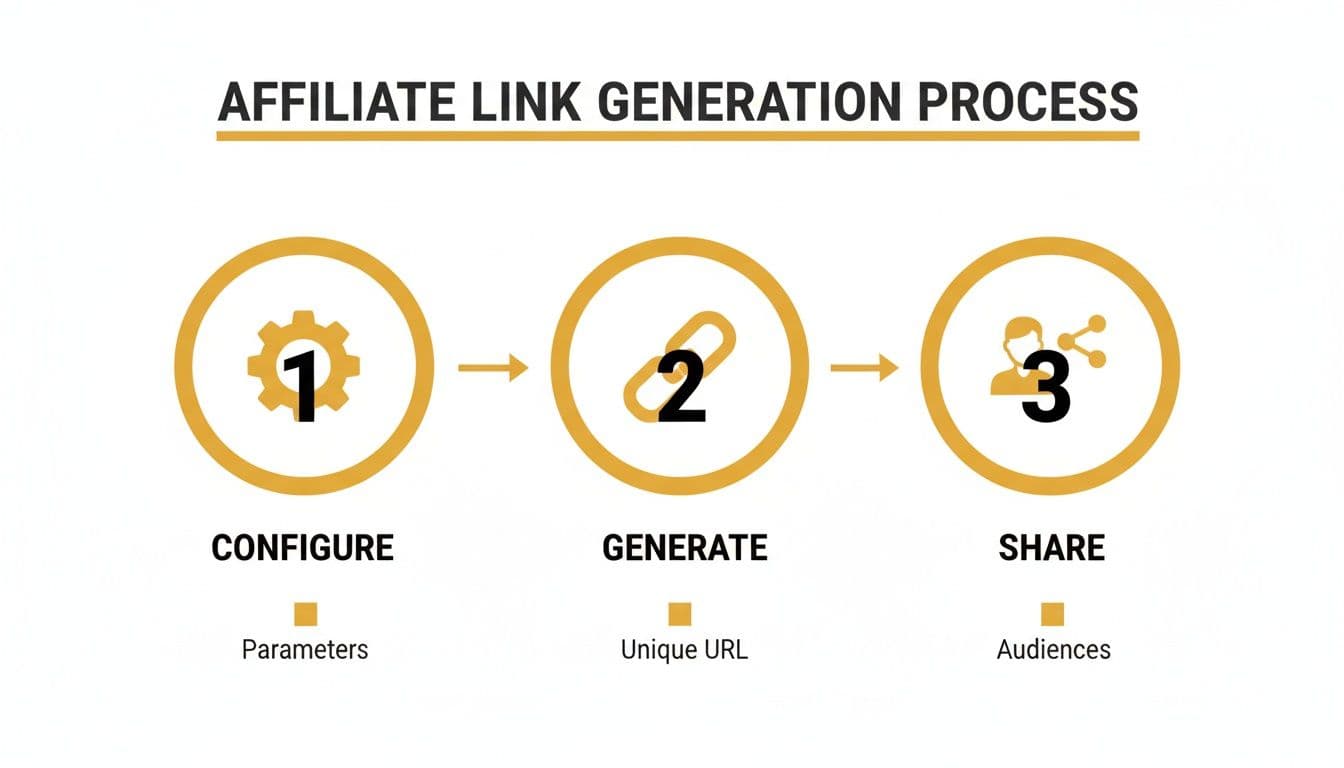
You don’t want partners waiting for manual link creation. The goal is instant link generation so they can promote immediately. Two common methods:
In-app link generation: the frictionless approach
Let users grab their affiliate links inside your product. A “Refer a Friend” section where authenticated users copy their link is simple and effective. As the SaaS founder, set the rules—percentage or flat-fee payouts—and let the platform handle generation and tracking.
An in-app approach captures the moment a customer feels excited about your product and turns that excitement into a shareable link.
Custom link creation via API
If you need programmatic control, create links via an API. This is great for workflows that automatically generate links when users hit milestones in your CRM or product.
Example Node.js snippet to create an affiliate link via API:
// Example Node.js snippet for API-based link creation

async function createAffiliateLink(userId) {
  const affiliateApiEndpoint = 'https://api.sharemysaas.com/v1/links';
  const apiKey = 'YOUR_API_KEY';

  try {
    const response = await fetch(affiliateApiEndpoint, {
      method: 'POST',
      headers: {
        'Authorization': `Bearer ${apiKey}`,
        'Content-Type': 'application/json',
      },
      body: JSON.stringify({
        user_id: userId,
        campaign: 'default-user-program'
      }),
    });

    if (!response.ok) {
      throw new Error(`API request failed: ${response.statusText}`);
    }

    const data = await response.json();
    console.log('Successfully generated link:', data.affiliate_link);
    return data.affiliate_link;

  } catch (error) {
    console.error('Error creating affiliate link:', error);
  }
}

// Usage:
createAffiliateLink('user-a4b8c1d9');
Whether you use in-app generation or an API, make link creation instant so partners can act on momentum.
Accurate tracking from first click to final conversion
Creating an affiliate link is only the start. Accurate tracking is how you ensure partners get credit for the customers they send. Modern systems combine first-party cookies and server-side tracking to maintain attribution even when customers convert days or weeks later.
Define your conversion events
Decide what counts as success: free-trial signups, demo requests, or paid subscriptions. For most SaaS companies, the primary conversion is a paid subscription. Typical events to track:
- Initial signup: fires when a user creates an account after clicking an affiliate link.
- Trial to paid: triggers when a trial converts to a paid subscription.
- Subscription upgrades: track when referred users move to higher plans.
Set up tracking scripts or use an events API to send these signals to your affiliate platform.
Monitor performance and optimize
With reliable events, your affiliate dashboard becomes mission control. Track these core metrics:
- Click-through rate (CTR): percent of viewers who click a link.
- Conversion rate: percent of clicks that become paying customers.
- Total revenue impact: revenue attributed to each affiliate.
Use these metrics to identify top performers and support them with better creative, custom landing pages, or higher tiers.
Automating promoter payouts with Stripe
Manually calculating commissions and sending payments is slow and error-prone. Automate payouts by integrating your affiliate platform with Stripe so earned commissions map directly to payments. Stripe’s Connect and Payouts documentation shows how to build secure, automated workflows3.
Automated payouts should support common SaaS reward models:
- Percentage commissions — recurring shares of subscription payments.
- Fixed amounts — flat fees per paid signup.
- Tiered rewards — increasing rates as affiliates hit milestones.
Automation removes human error and builds trust. It also helps with compliance and reporting by keeping accurate records and simplifying tax form generation.
Common operational questions
How long should my cookie tracking window be?
For most SaaS sales cycles, a longer cookie window (60–90 days) is reasonable. B2B purchases often involve demos, trials, and approvals, so a longer window ensures affiliates who work the lead are credited when it converts.
Should I use first-click or last-click attribution?
Last-click attribution is the simplest and most common model: it gives credit to the final touch before conversion. First-click rewards the introducer, while multi-touch models split credit among interactions but add complexity. For most SaaS programs, start with last-click and consider multi-touch later if you need finer-grained attribution.
How do I prevent gaming and fraud?
Use a platform with fraud detection to flag suspicious behavior, and publish clear terms of service that prohibit activities like cookie stuffing or unauthorized brand bidding. Recruiting affiliates from your existing customer base reduces fraud risk and improves alignment.
Do I need special landing pages for affiliates?
Dedicated landing pages aren’t required, but they improve conversions. A custom page that references the referring partner or an exclusive offer makes the recommendation feel more personal and trustworthy.
Quick Q&A
Q: What is the single most important element of an affiliate link?
A: A unique affiliate ID—an alphanumeric code that ties every signup back to a promoter.
Q: How should I prioritize tracking events?
A: Start with signup, trial-to-paid conversion, and upgrades. These events map directly to revenue and payouts.
Q: What’s the easiest way to pay affiliates reliably?
A: Integrate your affiliate system with Stripe to automate payouts and compliance.
1.
https://en.wikipedia.org/wiki/Amazon.com_Associates — Amazon Associates launched in 1996 and popularized modern affiliate reward models.
2.
https://www.grandviewresearch.com/industry-analysis/affiliate-marketing-platform-market — Market analyses and projections for affiliate marketing growth.
3.
https://stripe.com/docs/connect — Stripe Connect and payouts documentation for automating marketplace and affiliate payments.
💸 Get 10x More People SharingWith Zero-Friction Signup
Traditional sharing programs lose most potential promoters at signup. ShareMySaaS eliminates that barrier completely — users start sharing with one click, no forms required. Turn every satisfied customer into an active promoter and watch your reach explode.