Discover what is zero party data and why it's the key to personalization. Learn how to collect and use this data to build lasting customer relationships.
December 16, 2025 (2mo ago)
What Is Zero Party Data A Guide to Building Customer Trust
Discover what is zero party data and why it's the key to personalization. Learn how to collect and use this data to build lasting customer relationships.
← Back to blog
Zero-Party Data: Build Trust & Personalization
Summary: Discover what zero-party data is and why it’s the key to ethical personalization. Learn practical ways SaaS teams collect and use this data to boost trust, retention, and growth.
Introduction
Trying to understand customers only by watching what they click on is like guessing someone’s favorite food by watching them walk down a grocery aisle. You might get close, but you’re still guessing.
Zero‑party data cuts through the noise. It’s the information a customer intentionally and proactively shares with you—purchase intentions, personal goals, or communication preferences. It’s a direct conversation that removes guesswork and powers meaningful personalization.
What Is Zero‑Party Data and How Does It Compare?
Imagine you’re a barista. You could guess the 7 a.m. walk‑in wants black coffee (an inference from behavior), or you could simply ask, “What can I get for you today?” That second approach is the heart of zero‑party data: explicit, consensual, and actionable.
Zero‑party data gives you direct signals about what customers actually want, not just what you infer from their digital breadcrumbs. Use interactive marketing strategies to turn one‑way tracking into genuine two‑way conversations. See examples of interactive approaches here: Interactive Marketing.
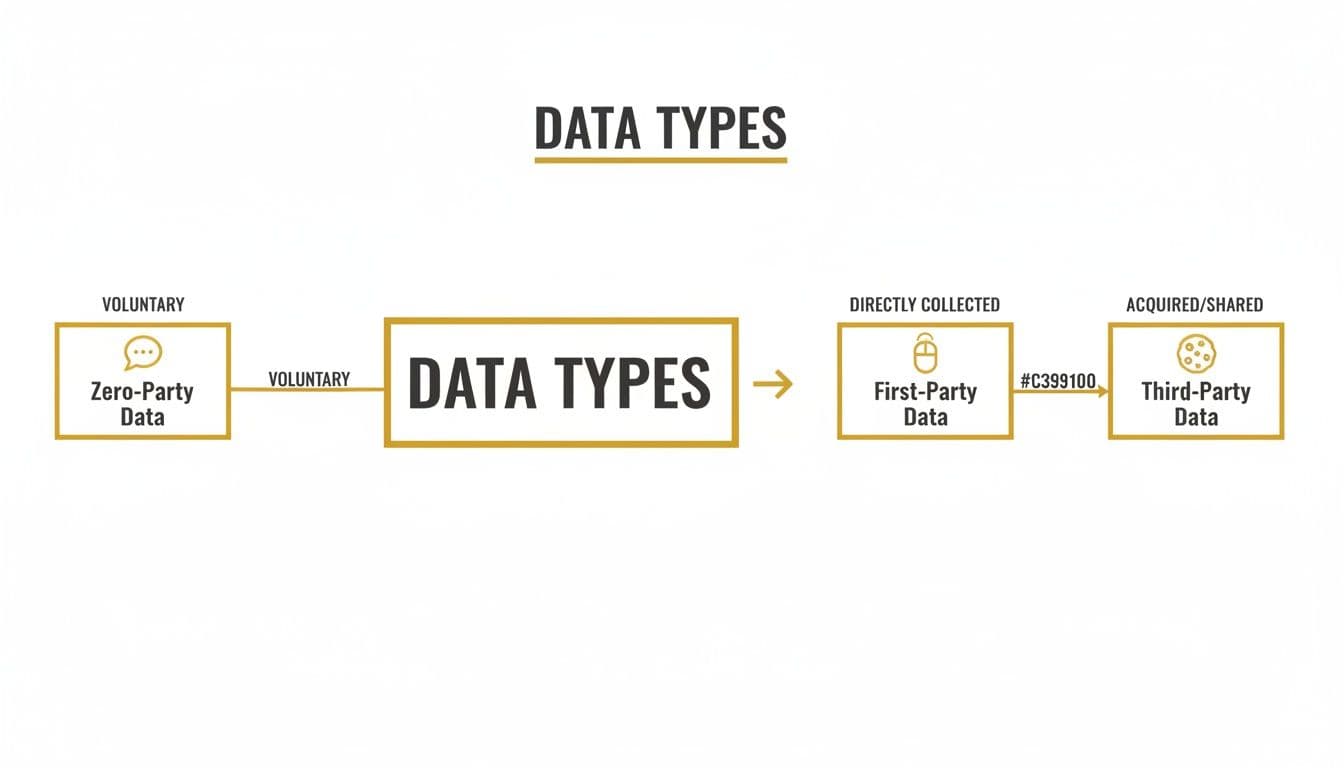
How Zero‑Party Data Stacks Up
| Data Type | How It's Collected | Example | Consent | Accuracy |
|---|---|---|---|---|
| Zero‑Party | Directly from the customer via quizzes, surveys, preference centers | User reports job title during onboarding | Explicit—user provides it | Very high |
| First‑Party | Observed behavior on your properties (site, app) | Tracking clicks and feature usage | Implicit—captured by analytics | High |
| Second‑Party | Purchased from another company's first‑party data | Buying event attendee lists | Indirect—user consented to original collector | Variable |
| Third‑Party | Aggregated and sold by brokers | Buying demographic profiles | Ambiguous/none | Often low |
Zero‑party data stands out for consent and clarity, making it a reliable foundation for long‑term relationships.
Why the Shift Is Happening Now
The old playbook—relying heavily on third‑party cookies—is collapsing as privacy expectations and regulations rise2. That shift is an opportunity: brands that earn data through transparent value exchanges will win trust and build sustainable personalization.
The term “zero‑party data” was popularized in 2018 to describe data customers intentionally share with brands1.
Why Zero‑Party Data Matters for SaaS
For SaaS businesses, product stickiness and user loyalty are everything. Zero‑party data helps you move beyond tracking clicks and toward understanding user goals. With it you can:
- Personalize onboarding by asking a new user their #1 goal and tailoring the first minutes to deliver a quick win.
- Build better products using in‑app surveys to uncover pain points and feature requests.
- Create content that actually helps because you know the outcomes users want.
Zero‑party data converts transactional relationships into collaborative partnerships that scale in a privacy‑first world.
Zero‑Party vs. First‑Party Data: The Critical Distinction
Don’t conflate zero‑party with first‑party. Think of conversational versus observational.
First‑party data is what users do on your platform—their clicks, sessions, and purchase history. Zero‑party data is what users tell you about themselves—the “why” behind their actions.

Example: With first‑party analytics you might see daily use of a Gantt chart. With zero‑party data you learn that the user is a “Marketing Manager” whose biggest challenge is reporting ROI. That combination—behavior plus stated intent—creates a complete picture that drives real personalization.
Quick Comparison Table
| Feature | First‑Party | Zero‑Party |
|---|---|---|
| Source | Observed behavior | Direct user input |
| Nature | Implicit | Explicit |
| Example | Viewed pricing page 3 times | Chose “Just browsing” in a pop‑up |
| Insight | What happened | Why it happened |
| Collection | Analytics, pixels | Quizzes, surveys, preference centers |
You need both: first‑party to spot patterns, zero‑party to understand motivations.
How Zero‑Party Data Drives Strategic Growth
Collecting zero‑party data isn’t a box to tick. It’s a growth engine when done as a true value exchange. Personalization driven by consented signals improves user experience, activation, and retention. Research shows personalization can materially boost engagement and revenue when done right3, and many consumers are willing to share data in exchange for better experiences4.
True 1:1 Personalization
Zero‑party data gets you the “why,” enabling real 1:1 personalization. Ask targeted questions during onboarding—“What’s your primary role?” or “What’s your biggest challenge?”—and instantly surface the features and content that solve that user’s problem.
Benefits:
- Faster time‑to‑value and higher activation
- Custom user journeys across product and email
- Content that speaks directly to self‑reported needs
Build Trust and Loyalty
People are skeptical about how their data is used. By asking for input and immediately using it to improve the experience, you build trust. When customers feel heard and see tangible benefits, loyalty grows.
Future‑Proof Your Data Strategy
With third‑party signals declining, zero‑party data helps you own a first‑class, consented data asset that’s resilient to policy changes and platform shifts2.
How to Collect Zero‑Party Data in SaaS
Collecting zero‑party data is about helpful conversations and clear value exchanges. People will share when the benefit is immediate and obvious.
Design a Clear “What’s in It for Me?”
Before you ask anything, answer the user’s silent question: “What’s in it for me?” If you can’t answer that in a concrete way, users will ignore your request. The value must be specific, contextual, and delivered instantly.
Examples:
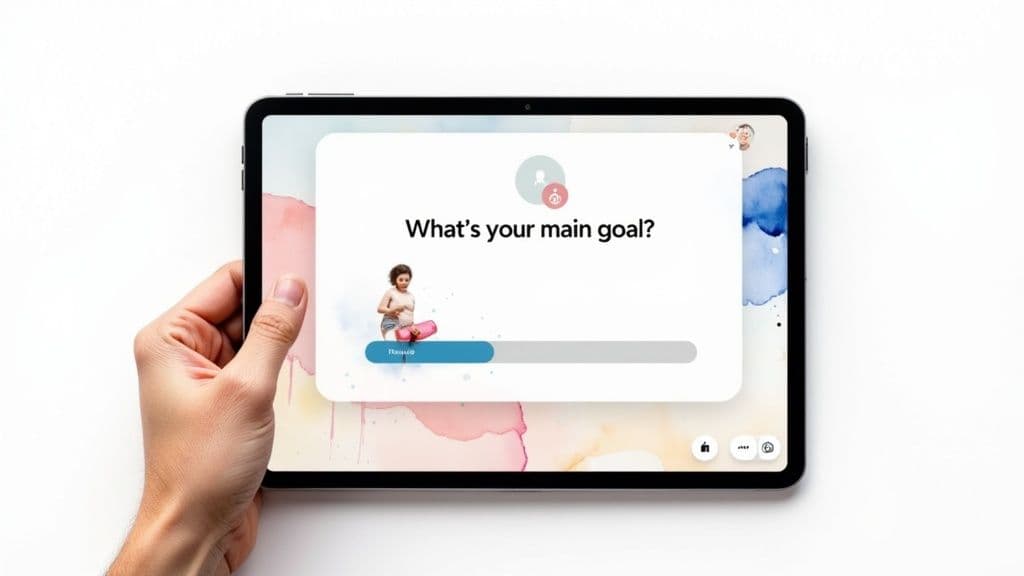
- Ask: “What’s your main goal for using our platform today?” Get: A dashboard configured to those goals.
- Ask: “Which topics interest you most?” Get: Immediate recommendations and tailored tutorials.
Proven Collection Methods for SaaS
- Interactive onboarding quizzes
- Prompt example: “Welcome! Tell us about your team: Solo founder, small marketing team, enterprise department.”
- Why it works: You can load relevant sample projects and feature tips.
- Gamified profile completion
- Use progress bars or unlockable rewards to encourage incremental profile updates.
- In‑app polls and micro‑surveys
- Ask short questions at the point of action (e.g., after a user tries a new feature) to get accurate, top‑of‑mind feedback.
You can also capture info inside tutorials or webinars using platforms that support in‑video capture. Track how people reach these collection points with UTM parameters for proper attribution: Google Analytics UTM parameters.
Practical SaaS Use Cases
Collecting zero‑party data only pays off when you act on it. Here are practical ways SaaS teams turn direct user signals into product and business wins.
Personalize Onboarding for Faster Time‑to‑Value
A simple role question at sign‑up lets you hide irrelevant features and guide users to their quick wins—reducing overwhelm and increasing activation.
Segment Email Marketing by Stated Interests
Instead of generic blasts, send targeted content based on what users said they care about. A user who selects “growing my list” gets lead magnet strategies; a user who chooses “automation” sees workflow tutorials.
Example: ShareMySaaS prompts users to define goals early, helping tailor content and onboarding flows.
Inform Product Roadmaps with Direct Feedback
Use targeted polls to prioritize integrations and features. Asking your power users “Which integration would help you most?” yields direct data to guide development and reduce wasted effort.
Making a Zero‑Party Data Strategy Work
Rolling out zero‑party data requires a user‑first approach: transparency, clear value, and smart integration.
Start Small and Ask Contextual Questions
Avoid long forms. Ask one or two targeted questions at the right moments to build profiles progressively. This reduces fatigue and improves data quality.
Be Radically Transparent
Explain exactly how you’ll use data: “Tell us your role so we can customize your dashboard with the most relevant reports.” Concrete benefits build trust and encourage sharing.
Integrate and Automate for Real‑Time Action
Connect collection tools to CRM, marketing automation, or a CDP so answers trigger immediate personalization—automated email sequences, in‑app messages, or product flags for the team.
Maintain Compliance and Security
Zero‑party data is personal data. Treat it with strong security, access controls, and user rights (view/delete) under regulations like GDPR and CCPA. See GDPR and CCPA resources: GDPR and CCPA.
Questions & Answers
Q: What’s the difference between zero‑party and first‑party data?
A: First‑party is what you observe; zero‑party is what users tell you directly. Use both together to understand behavior and intent.
Q: How do I get users to share zero‑party data?
A: Offer a clear, immediate benefit. Ask short, contextual questions and show the result right away (personalized dashboard, tailored content, etc.).
Q: Is zero‑party data legally safer than other data types?
A: It’s consented and transparent, which reduces legal risk, but you still must store and handle it securely and honor user rights under GDPR/CCPA.
Ready to convert satisfied users into advocates? ShareMySaaS helps you launch in‑app referral programs with instant, unique links. Start today: ShareMySaaS.
1.
Forrester Research popularized the term “zero‑party data” in 2018; see general overview at https://en.wikipedia.org/wiki/Zero-party_data
2.
Web platforms and browsers have moved to limit third‑party cookies; see Google Chromium announcement https://blog.chromium.org/2020/01/building-more-private-web.html
3.
Research on personalization’s business value and impact on engagement and revenue; see McKinsey on personalization https://www.mckinsey.com/business-functions/marketing-and-sales/our-insights/the-value-of-getting-personalization-right-or-wrong-is-multiplying
4.
Accenture research on consumer willingness to share data for personalization and better experiences; see https://www.accenture.com/us-en/insights/consumer-goods-services/consumer-data
💸 Get 10x More People SharingWith Zero-Friction Signup
Traditional sharing programs lose most potential promoters at signup. ShareMySaaS eliminates that barrier completely — users start sharing with one click, no forms required. Turn every satisfied customer into an active promoter and watch your reach explode.