Master SaaS affiliate programme management. This guide covers designing rewards, recruiting quality partners, and scaling your program for real growth.
February 15, 2026 (19d ago)
A Modern Guide to SaaS Affiliate Programme Management
Master SaaS affiliate programme management. This guide covers designing rewards, recruiting quality partners, and scaling your program for real growth.
← Back to blog
A Modern Guide to SaaS Affiliate Program Management
Master SaaS affiliate programme management. This guide covers designing rewards, recruiting quality partners, and scaling your program for real growth.
Introduction
Managing a SaaS affiliate program is strategic work: recruit the right partners, track their performance accurately, nurture relationships, and handle payouts on time. Done well, an affiliate channel becomes a predictable, scalable revenue engine that aligns partner incentives with your business goals.
Building Your Affiliate Program Foundation
Jumping into an affiliate program without a solid strategy is like setting sail without a map. Before recruiting your first partner, lay the groundwork so the program directly supports your core business objectives. This isn’t just about link-sharing; it’s about building an integrated growth engine that delivers predictable results.
Good affiliate management starts by asking the right questions. What are you trying to accomplish? Is the goal to lower Customer Acquisition Cost (CAC), or to increase Lifetime Value (LTV)? A program built for low-cost, high-volume sign-ups looks very different to one designed to attract high-value, long-term customers.
Aligning Goals with Program Design
Consider two SaaS scenarios:
- A B2C productivity app priced at $10/month is typically a volume play focused on lowering CAC.
- A B2B analytics platform at $500/month needs high-quality leads with strong LTV.
Getting strategic alignment right from the start turns your affiliate program from a cost center into a profit center. For a step-by-step checklist on setup, see our guide on how to start an affiliate program.
“A well-structured affiliate program shouldn’t just be another marketing channel. It should reflect your business’s financial goals and turn partner relationships into predictable revenue.”
Modeling Your Commission Structure
Once you’ve set your goals, model commission structures that motivate affiliates while preserving margin. Common options include:
- One-Time Payouts: A flat fee or a percentage of the first payment. Good for quick sign-ups but weak on retention incentives.
- Recurring Commissions: The gold standard for subscription businesses—pay a percentage of renewals for a set period or lifetime to align affiliate and company incentives.
- Tiered Structures: Reward top performers with increasing rates as they scale volume.
Study different models and run the numbers to find what your business can sustain. For examples of structured affiliate programs, see how others build winning programs in different verticals, such as cryptocurrency affiliate programs: https://domino.run/blog/cryptocurrency-affiliate-program.
Designing a Commission Structure That Attracts Top Partners
Your commission structure is the engine of the program. A weak model attracts low-effort partners and poor-quality traffic. In SaaS, where LTV matters, opt for structures that reward affiliates for durable customer relationships.
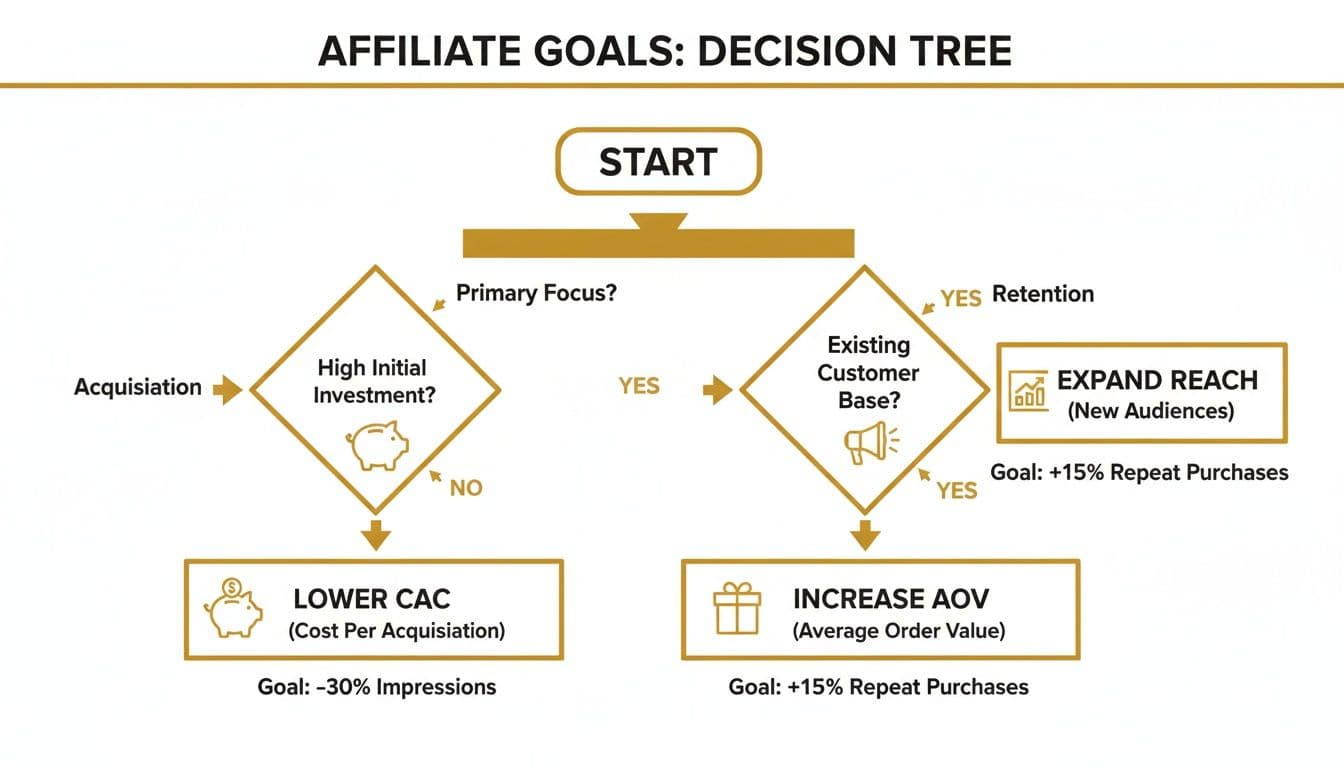
If you chase immediate ROAS, design models that lower CAC. If you build for long-term growth, maximize LTV.
Key Commission Models for SaaS
- Recurring Revenue Share: Pay a percentage (often 20–30%) of each payment. Aligns incentives for affiliates to find low-churn customers.
- One-Time Payouts: Simpler to manage and predictable, but gives no retention incentive.
- Tiered Commissions: Motivates top partners with escalating rates as volume increases.
Setting Competitive Rates
To attract top partners, rates must be competitive. The affiliate industry is large and growing; research shows the market size in the billions, so partners have choices1. Benchmark competitor offerings, consider cookie window length, and evaluate the potential for recurring income.
Pro tip: Offer a higher “founding” commission when launching to attract influential early partners.
| Model Type | Best For | Pros | Cons |
|---|---|---|---|
| Recurring Revenue Share | Subscription SaaS with high LTV | Attracts long-term partners; aligns incentives | More complex to track; payouts vary month-to-month |
| One-Time Payout | Low-price or short sales cycle products | Simple and predictable | May attract lower-quality traffic; no retention incentive |
| Tiered Commissions | Scaling programs with top performers | Incentivizes growth and loyalty | Complex to configure; may demotivate low-volume partners |
A fair, transparent commission plan makes affiliates feel like an extension of your team.
Recruiting and Activating High-Impact Affiliates
Generous commissions mean little without the right partners. Your most effective promoters are often your happiest customers. They already understand the product, can speak authentically about it, and convert well.
Turn Customers into Promoters with In-App Flows
Embed recruitment into the product experience. Trigger offers at “wow” moments—after a meaningful task or milestone—and make sign-up one-click simple. Provide an immediate tracking link and a basic dashboard so motivated customers can start promoting right away.

Expanding Your Reach Beyond Your User Base
To scale, recruit external partners through targeted outreach:
- Niche content creators: Bloggers, YouTubers, and podcasters who already serve your audience. See our affiliate recruitment playbook.
- Complementary tech partners: Non-competing SaaS tools that serve the same customers.
- Industry influencers and consultants: Trusted advisors who recommend tools to clients.
Approach outreach as partnership invitations—explain how your product helps their audience and the mutual benefits.
From Recruitment to Activation
Sign-up is the start; activation is getting affiliates to share and land referrals. Use an onboarding email series to guide new partners:
- Welcome & Quick Start: Deliver their tracking link and a short “Getting Started” guide.
- Product Deep Dive: Provide talking points and feature highlights.
- Assets & Inspiration: Share banners, logos, social copy, and examples of high-performing affiliate content.
Eliminate excuses for inaction by giving partners the tools and clarity to succeed.
Implementing Trustworthy Tracking and Attribution
Trust is the currency of affiliate programs. Affiliates must be confident they’ll be credited and paid for referrals. A reliable technical foundation prevents disputes and churn.
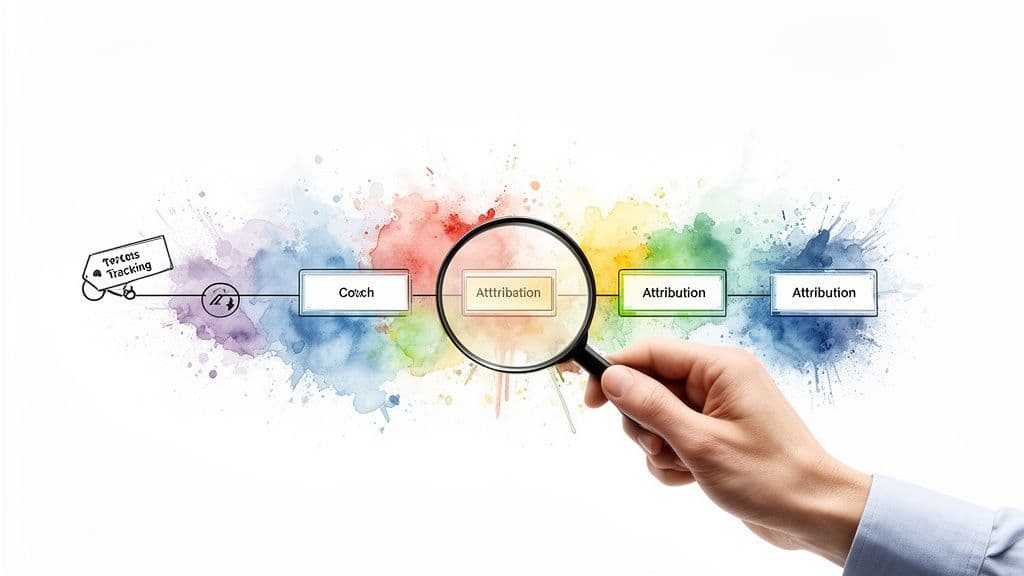
Tracking typically uses cookies to store an affiliate ID when a visitor clicks a partner link. Choose a fair cookie window—commonly 30, 60, or 90 days for SaaS—to accommodate longer buying cycles.
Choosing Your Attribution Model
When customers interact with multiple affiliates, decide how to credit conversions:
- Last-Click Attribution: The final affiliate link before conversion gets credit. It’s simple and common.
- First-Click Attribution: Rewards partners that generate initial awareness.
Most SaaS programs default to last-click for clarity, but if you want to reward top-of-funnel activity, first-click can help. Pick a model, state it clearly in your affiliate terms, and stick to it. For more on attribution, see this primer on marketing attribution: https://marketbetter.ai/blog/2025/11/03/what-is-marketing-attribution/.
A single source of truth is non-negotiable. Both you and your affiliates must see the same dashboard with consistent data on clicks, conversions, and commissions.
Ensuring System Reliability and Compliance
Select a robust affiliate platform and run regular audits. Tracking pixels can fail and ad blockers can interfere—test conversions and monitor for anomalies. Keep terms clear to prevent fraud and ensure you comply with privacy laws such as GDPR and CCPA.
On average, affiliate marketing delivers strong returns, and affiliate channels can contribute materially to company revenue—so accuracy and compliance matter23.
Scaling Your Program with Automation and Optimization
When growth hits, spreadsheets and one-off emails become bottlenecks. Move to a dedicated affiliate platform to centralize tracking, partner management, and payouts.
Automate Your Core Workflows
Automate payouts and communication to scale reliably. Integrate with payment processors like Stripe and use scheduled payouts to keep partners paid accurately and on time. Automate onboarding email sequences (Day 1 welcome, Day 3 resource pack, Day 7 check-in) so every affiliate gets the guidance they need.
Use Analytics to Drive Real Optimization
Use your affiliate dashboard to identify the 20% of partners driving 80% of results. Don’t focus on vanity metrics—prioritize KPIs that affect the bottom line. Analyze your top performers to build playbooks you can share with other partners.
Tracking the Right KPIs for Program Health
Key metrics to monitor:
| KPI | What It Measures | Typical SaaS Benchmark | Tip |
|---|---|---|---|
| Affiliate-Driven Revenue | Revenue from affiliate referrals | 15–30% of new revenue | Segment by partner to find heavy hitters |
| Active Partner Ratio | Signed affiliates who drive clicks/conversions | 10–20% | Improve onboarding to raise this number |
| Conversion Rate (CVR) | Clicks to paid subscriptions | 1–5% | Study partners with high CVRs for messaging cues |
| Average Order Value (AOV) | Revenue per affiliate-referred customer | Varies by pricing | Reward affiliates who send higher-tier customers |
Automation frees you from manual tasks while data-driven optimization increases ROI.
Common Questions About SaaS Affiliate Programs
“How Long Until We See Real Results?”
You can set up the tech quickly, but meaningful revenue usually takes time. Expect 1–3 months for recruitment and activation and 4–6 months for steady revenue as top affiliates find their rhythm.
“What About Affiliate Fraud?”
Fraud is manageable with the right tools and processes. Use platform safeguards to flag anomalies, spot-check early conversions from new affiliates, set clear terms, and recruit reputable partners.
“Which Commission Model Is Best: One-Time or Recurring?”
For most subscription businesses, recurring commissions are best. They align affiliate incentives with customer retention and attract serious partners. One-time payouts can work for promotions or specific product types.
Ready to turn your best customers into your most powerful promoters? ShareMySaaS makes it happen with a zero-friction, in-app affiliate platform. Get started in minutes and activate your user base today.
Quick Q&A
Q: What commission model should a SaaS company choose? A: For most SaaS companies, recurring revenue share aligns partners with long-term customer value. Consider one-time or tiered models only when they fit your product pricing and acquisition goals.
Q: How do I recruit quality affiliates fast? A: Start with your happiest customers using in-app recruitment at “wow” moments, then target niche creators, complementary partners, and industry consultants with personalized outreach.
Q: What tracking setup prevents disputes? A: Use a reliable affiliate platform, set a fair cookie window for SaaS buying cycles, choose a clear attribution model, and offer a single dashboard both you and partners trust.
💸 Get 10x More People SharingWith Zero-Friction Signup
Traditional sharing programs lose most potential promoters at signup. ShareMySaaS eliminates that barrier completely — users start sharing with one click, no forms required. Turn every satisfied customer into an active promoter and watch your reach explode.